Refractory Ceramic Balls
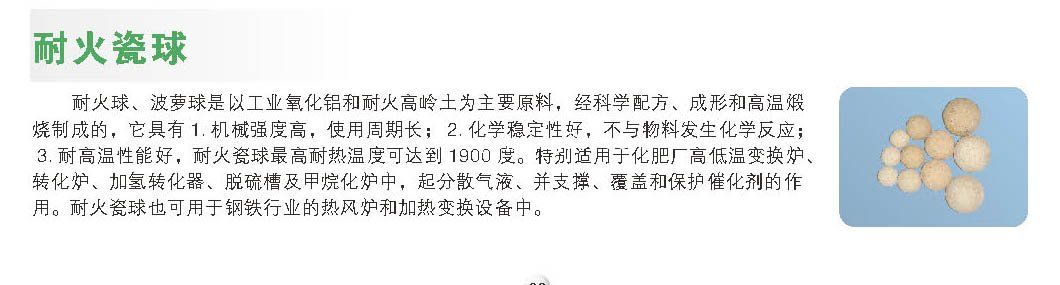
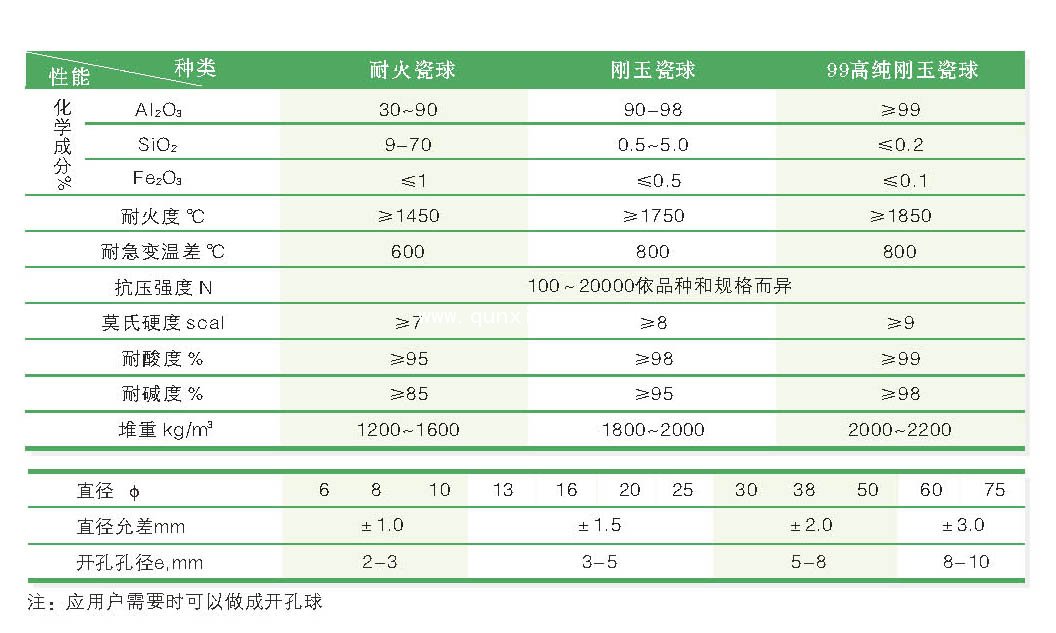
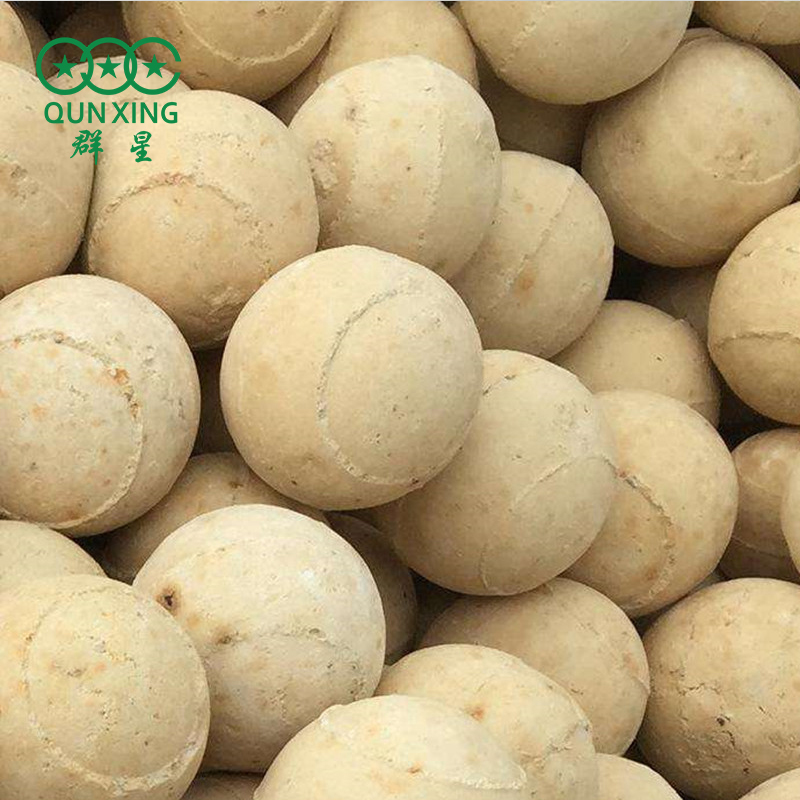
Refractory ceramic balls and pineapple balls are made from industrial alumina and refractory kaolin as main raw materials, formed through scientific shaping and high-temperature calcination. They feature:
1. High mechanical strength and long service life;
2. Good chemical stability — no chemical reaction with process materials;
3. Excellent high-temperature resistance — the maximum heat resistance temperature of refractory ceramic balls can reach 1900°C.
They are especially suitable for high/low temperature shift converters, reformer furnaces, hydrogenation converters, desulfurization tanks and methanation furnaces in fertilizer plants, where they serve to disperse gas and liquid, and to support, cover and protect catalysts. Refractory ceramic balls can also be used in hot blast stoves and heating conversion equipment in the steel industry. They are classified into ordinary refractory balls and high-alumina refractory balls: ordinary refractory balls are suitable for converters and shift furnaces in the sulfuric acid and fertilizer industries, while high-alumina refractory balls are suitable for hot blast stoves and heating shift furnaces in urea, steel and other industries.